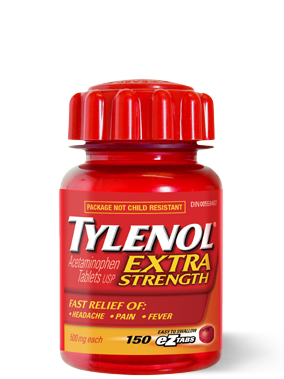
Public health advice(from MDs and hospitals) currently considers Tylenol use safe during pregnancy.
It is also know that about half of all pregnant women consume
Tylenol as a solution for their pain and discomfort.
A study just published out of the Journal of American Pediatrics
in August of 2016 showed that Tylenol consumption by pregnant
women increased the baby having emotional symptoms by
29%, hyperactivity by 31%, and total difficulties by 46%.
This is a problem…and one that few doctors, let alone women and future mothers know about.
So what if these mothers knew there was a
different solution that did not put their
unborn baby at risk of having emotional, hyperactive, or neurodevelopmental
problems?
This brings us to a study from the Journal of Spine published in 2003. (references below)
Three groups of patients who were in pain were split up and treated
One group got drugs(vioxx
and celebrex), one group
received acupuncture, and one group received chiropractic.
The results showed that Chiropractic was 5 times better than the drugs and 3 times more effective than the
acupuncture!
And…the patients in the Chiropractic group were considered the worst because they had been in chronic pain for the longest compared to the other 2 groups.
Think about that, what if pregnant women knew about the effectiveness of Chiropractic and its low-risk no side-effects benefits for her or her growing baby!
Once again, what the public doesn’t know can and will hurt them.
Explore and experience the possibilities of chiropractic!
For your better health,
Dr. Heller
References
1) Journal of the American Medical Association Pediatrics. August 15, 2016
Evie Stergiakouli, PhD; Anita Thapar, FRC, PhD; George Davey Smith, MD, DSc
2)
Journal of Spine 2003 Jul 15;28(14):1490-502 “Chronic pain: a
randomized clinical trial comparing medication, acupuncture, and spinal
manipulation”
Giles LG, Muller R.
Showing posts with label side effect. Show all posts
Friday, September 30, 2016
Wednesday, August 14, 2013
Tylenol: The not so safe pain reliever
Even though we consider acetaminophen (e.g., Tylenol) a safe pain reliever for both children and adults it can be extremely dangerous and causes significant side effects. Acetaminophen has been linked to over 100,000 calls to poison control centers; 50,000 emergency room visits, 26,000 hospitalizations, and more than 450 deaths from liver failure each year.
The folks at GreenMedInfo.com have once again done a wonderful job of reviewing the problems and history of acetaminophen. Below is the exerpted article.
Enjoy.
*********************************************************
The Dangers of Tylenol: Is it Time for the FDA to
Remove it From the Market?
www.greenmedinfo.com
Posted on: Thursday, August 8th 2013 at 1:00 pm
![]() |
| photo from Wikicommons |
Introduction
Most people consider acetaminophen (e.g., Tylenol) as being an extremely safe pain reliever for both children and adults. The reality is that it can be extremely dangerous and causes significant side effects. Each year acetaminophen causes over 100,000 calls to poison control centers; 50,000 emergency room visits, 26,000 hospitalizations, and more than 450 deaths from liver failure. In addition, regular use of acetaminophen is linked to a higher likelihood of asthma, infertility, and hearing loss (especially in men under 50 years of age).
The FDA has done a poor job alerting
the public to the dangers of acetaminophen. In my opinion, it is a drug that
serves no real medical purpose in the 21st century. Its use should
be curtailed or even eliminated entirely.
Background Data
Acetaminophen is the only remaining member of the class of drugs known as "aniline analgesics" that is still on the market. The rest were discontinued long ago. Acetaminophen only blocks the feelings of pain and reduces fever, it exerts no significant anti-inflammatory action.
Acetaminophen is very hard on the
liver and is known to reduce the liver's store of the important detoxifying aid
and antioxidant glutathione. When acetaminophen is combined with alcoholic
drinks or other compounds toxic to the liver including other medications, its
negative effects on the liver are multiplied. It should definitely not be used
in anyone with impaired liver function.
Acetaminophen is often the drug of
choice in children to relieve fever. However, use for fever in the first year
of life is associated with an increase in the incidence of asthma and other
allergic symptoms later in childhood. Asthma appears to be another disease
process that is influenced greatly by antioxidant mechanisms. Acetaminophen
severely depletes glutathione levels not only in the liver, but presumably
other tissues as well and should definitely not be used in people with asthma.
New Data
On August 1, 2013 the FDA released a notification on acetaminophen that it is now associated with rare, but severe and sometimes fatal skin reactions even at recommended dosages.
These skin reactions, known as
Stevens-Johnson Syndrome (SJS), toxic epidermal necrolysis (TEN), and acute
generalized exanthematous pustulosis (AGEP) are associated with reddening of
the skin, rash, blisters, and detachment of the upper surface of the skin.
These reactions can occur at any time while acetaminophen is being taken – they
can happen the first time it is used or after long-term use. Other drugs used
to treat fever and pain/body aches (e.g., non-steroidal anti-inflammatory
drugs, or NSAIDS, such as aspirin, ibuprofen and naproxen) also carry the risk
of causing serious skin reactions, which is already described in the warnings
section of their drug labels.
The FDA's solution is that they will
now require that a warning be added to the labels of prescription drug products
containing acetaminophen to address the risk of serious skin reactions. FDA
will also request that manufacturers of OTC acetaminophen drug products to add
a warning about serious skin reactions to the product labels.
Comment
It just might be time to pull the plug on acetaminophen. Can you imagine if the side effects and risks associated with acetaminophen were associated with a dietary supplement? It would be yanked from the market immediately. The FDA needs to quit following a double standard and instead look after the public's best interest not only by calling for more warnings on labels, but also by pulling from the market outdated, potentially dangerous drugs especially those available over-the-counter.
******************************************************
Here is one more reason to not cover the pain with medication and over-the-counter pain relievers. To be truely healthy and avoid unnecessarly side effects visit your doctor of chiropractic to have those lingering aches and pains evaluated. Through proper spinal care you may find the pain relievers are no longer necessary and you can confidently enjoy life again.
If you or a loved one is regularly taking acetaminophen or other pain reliever call our office to schedule a no cost, no obligation initial consultation to find out what we may be able to do to help you live life to the fullest.
Yours for better health,
Dr. Heller
Reference
http://www.fda.gov/Drugs/DrugSafety/ucm363041.htm
Tuesday, July 30, 2013
Influence of Pharmaceutical Ads on Healthcare
A study
appearing in the October 2012 issue of the Annals of Family Medicine
explores the question of how drug companies are influencing both
the practice of medicine and the health of patients who seek care from medical
providers.
The authors note "Spending on prescription drugs in
the Unites States has risen nearly 6-fold since 1990, reflecting substantial
increases in treatment of chronic conditions and subsequent polypharmacy
(multiple prescriptions). As many as 45%
of Americans have at least 1 diagnosed chronic condition, and 60% of the most prescribed medications were
for hypertension, high cholesterol levels and diabetes. The Centers for
Disease Control and Prevention estimates that 11% of the US population and 40% of people older than age 60 take 5
medications or more."
The authors focused their review on management of type II
diabetes and hypertension, two of the most common chronic health conditions. The study examined the overwhelming
prevalence of prescription drug use in managing these two conditions and
focused on the influencing factors more closely.
Factors recognized:
Lower diagnostic
thresholds – This mean that more people are diagnosed with a disease they
didn't previously have.
The definition for hypertension
(high blood pressure) was lowered in 1993 from a pressure of 160/95 to 140/90
in non-diabetic patients. In 1998, the hypertension level for diabetics was set
at 130/80, lower than that of non-diabetics. These two changes created an
estimated 22 million additional hypertension diagnoses. The pre hypertension level
was also established in 1998 at 120/80.
Clinician Incentives - Medical
doctors are often rewarded for keeping their patients below certain standards
based on established guidelines.
The Prescribing Cascade – As most people know, prescription drugs can have adverse impacts on patients. They can produce symptoms that prompt the prescribing of additional drugs to combat the side effects of the first.
Two-thirds of patients with diabetes
and hypertension reported symptoms which they attributed to their medications,
with several patients hospitalized because of symptoms, prompting a medication
change. This study found 89% of the
patients "reported taking multiple medications, averaging 4.8
prescriptions with more than half (51%) taking 5 or more." The sad fact is
that many of the patients were expected to continue taking these medications
"permanently."
What to Do?
The authors call for a reform on how much influence the pharmaceutical
industry has on the practice of medicine: "At a minimum, we urge
policies excluding individuals or organizations with financial conflicts of
interest from involvement with guideline-writing panels. They also suggest that
physicians "be discouraged from seeing drug representatives."
So what is the
take home from this information?
We see that chronic illnesses are experienced by 45% of
the population.
These numbers are tremendously high, considering that
almost all chronic diseases are due to lifestyle. Without the proper lifestyle changes, drugs
will have little effect on these conditions other than suppressing the symptoms
and creating even more problems. Are we
starting to see where part of the problem with our rising healthcare costs are
coming from?
Drug manufacturing is a business, run for profits. The public is persuaded to believe that these
companies have only altruistic intentions; to help the masses be
“healthier”. This is often the furthest
thing from the truth. As we saw in the
above study, guideline criteria are often modified to increase the “market
pool” for the drugs.
The pharmaceutical industry was a $325
Billion business in the US in 2012. For
years the most profitable business in the U.S. has been the pharmaceutical
corporations, which routinely top the annual fortune 500 list.
An essential part of the pharmaceutical industry’s overwhelming ‘success’ lays in the liaison
between the corporations and the ‘symptoms management’ health care industry:
The pharmaceutical representative. The men and women we see meeting with
physicians, walking into offices with gifts of lunch for the staff, meeting
with the doctor while you wait for your appointment. These
individuals are working for their paycheck, not your health.
As concerned individuals we must take it upon ourselves
to regain and maintain our health and well being. This is the goal at David City Chiropractic; to coach and
empower or patients to live healthier and more wellness oriented lives by
modifying lifestyle habits from simple postural correction to nutritionally
enhancing the body for optimal immunity and hormonal health. If this sounds interesting to you, contact
our office for more information.
The answer to the nation’s healthcare crisis is not more
drugs and technology to treat sick people but fewer people getting sick.
Yours For Better Health,
Dr. Heller
Thursday, June 27, 2013
Top 10 Signs of Spotting a Medical Quack
We hear a lot of warnings about medical quackery these days as the interest in complementary and alternative therapies rises. Most of the finger pointing is toward the alternative care fields. NaturalNews.com has an interesting point of view on what constitutes "Quackery". The author has put together a list of 10 signs that a practicioner may be a quack.If I might add, I think the author may have hit on some important points to consider.
Enjoy.
*********************************************
(NaturalNews) We've been brainwashed into believing medical quackery and this article offers the logical proof. As you read the following 10 signs, think through your interactions with your medical provider. Do more than one apply?
1. He prescribes medication without testing you for anything.
Doctors are big on scientific evidence. They demand that millions of dollars be poured into research to prove that things work.Yet, when you visit their office, they often don't gather any verifiable evidence on what they are treating YOU for. Isn't that interesting?
You spend a few minutes with a guy who prescribes powerful medication to mess with your neurotransmitters. No tests - not even a questionnaire. You bring your kid in to a pediatrician and leave a few minutes later with powerful brain stimulants for ADHD - and the doc never did one test!
Quacks don't know of any tests for many of the conditions for which they regularly prescribe medication.
2. He tells you it's all in your head.
Telling you that your real symptoms are all in your head (translation: he thinks you are crazy) means that the answers are NOT in his head. When quacks don't have the answer, they don't consider that there is anything for them to learn. They just blame you. Nice.A legitimate practitioner will admit when he doesn't know something and commit to finding solutions by expanding his knowledge, or working with other practitioners on your case who may shed fresh light on the subject.
3. He denies the role of lifestyle, nutrition and stress.
Eat the donuts, camp out on the couch, drink the booze...no problem. This has nothing to do with disease. Just take your pills.Nowadays, some quacks are conceding that diet and lifestyle have something to do with the onset of disease, but they are STILL NOT TALKING TO YOU ABOUT IT. They never mention it. They don't ask you how you eat, sleep or manage stress.
It's because quacks don't know much about these things. When practitioners do not know much about the cause of 90% of disease - I call that a scam.
4. He'll put you on the medication roller coaster.
Some unfortunate folks, after dealing with a quack that doesn't know what he is doing, end up on 10-20 pharmaceutical medications and have lost touch with what it is like to feel normal. They live in a world of symptoms and side effects and - for some reason - keep going back for more.The quack responds by continuing to dish it out, but he has NO IDEA how these medications are interacting with each other, really. He is just guessing and writing more prescriptions.
5. His own health is a mess.
Walk your talk. Does your doc do it? Is he an example of true health? If not, then he may not even know what genuine health feels like. How is he going to get you there?Doctors are among the most stressed out and suicidal populations on earth. Bless them, for they maintain crazy schedules and are truly under duress. Still, it is no excuse. We are all stressed. Docs are supposed to be examples, are they not?
6. He doesn't involve you in your own treatment.
So, you heard that this or that lab test might be worth doing. You read an article or did some of your own research, huh? Is your doctor interested? Is he willing to consider that you may know something?Quacks look down their nose at you, but real health practitioners will cooperate with you in your own treatment. They will investigate with you, consider your ideas, your feelings and work as a member of your team.
7. He believes you cannot heal, but treats you anyway.
You have a disease for which there is no cure. You will need to take these pills for the rest of your life. Please don't believe that nutrition, vitamins, herbs, God or anyone can heal you. You are stuck. Take your medicine.Meanwhile, thousands of your fellow human beings are healing from the very symptoms that trouble you. You are dealing with a quack who will medicate you into oblivion and witness your inevitable decline according to his expectations.
8. His communication skills are pathetic.
You have six months to live. Nothing more we can do. There's the door.Thanks for the compassion, doc.
9. He spends less than 10 minutes with you.
Recent research shows that new doctors are spending less time than ever with patients - an average of eight minutes per. This is NOT headed in the right direction folks! This is your health - the most precious gift you have. It needs time and attention and real expertise. Eight minutes is not enough.New docs are quoted as saying, "We just don't have time."
Translation: "We don't have time if we are going to make a lot of money."
Money before patients = quackery.
10. He thinks he is God.
In spite of all the obvious signs of quackery, he still thinks he is all knowing. You still cannot connect with him as a person. He doesn't see you as a person. He won't take your ideas and suggestions, because you obviously don't know anything. After all, he is omniscient.Stop supporting your quack and find real help. Do it intelligently. Begin to seek integrative and alternative practitioners who, according to the 10 signs, qualify as real health practitioners.
Learn more: http://www.naturalnews.com/040950_quackery_doctors_modern_medicine.html#ixzz2XQNgv4Ra
Mike Bundrant is co-founder of the iNLP Center and host of Mental Health Exposed, a Natural News Radio program.
************************************************
Remember, healthcare is about more than prescribing a pill to cover the symptoms. You and your loved ones deserve more!
For your better health,
Dr. Heller
Friday, December 28, 2012
Multiple Vaccines Per Visit Increases Risk
A new study, published in Human and Experimental Toxicology
analyzed more than 38,000 reports of infant hospitalizations and deaths
following vaccinations. Researchers have found statistically significant
correlations between the number of vaccine doses administered to infants
and infant hospitalization and mortality rates: babies who receive the most vaccines tend to have higher (worse) hospitalization and death rates.While each childhood vaccine has individually undergone clinical trials to assess safety, studies have not been conducted to determine the safety (or efficacy) of combining vaccines during a single physician visit as recommended by the Centers for Disease Control and Prevention's (CDC) guidelines.
<< Read Full Story>>
Subscribe to:
Posts (Atom)
