Showing posts with label brain. Show all posts

Thursday, July 11, 2013

Another Good Reason To Avoid Refined Carbohydrates

When watching our weight we can often joke about being "addicted" to sweets, cakes and pastries.  It turns out, that comment may not be as far from the truth as you may have thought.

A new study published in the American Journal of Clinical Nutrition and reported in Medscape.com finds that the consumption of refined carbohydrates increases the blood flow to the area of the brain that relates to addictions and can literally alter the activity of the brain.

This also helps explain why fast food and soft drink industry finds the addition of sugar to their products so profitable.

Refined Carbs May Trigger Food Addiction

Kathleen Louden
www.medscape.com    Jul 02, 2013


Consumption of a meal that has a high glycemic index (GI) appears to stimulate key brain regions related to craving and reward, a finding that supports the controversial hypothesis of food addiction, new research suggests.

Investigators from Boston Children's Hospital in Massachusetts found that compared with consumption of a low-GI meal, a meal high in refined carbohydrates decreased plasma glucose, increased hunger, and selectively stimulated brain regions 4 hours after eating — a critical time point that influences eating behavior at the next meal.

"We think we have shown for the first time that refined carbohydrates' biological effects can provoke, independent of calories and tastiness, symptoms related to addiction in susceptible people — those who are overweight or obese," said the study's principal investigator, David Ludwig, MD, from Boston Children's Hospital.

Dr. Ludwig, director of the hospital's New Balance Foundation Obesity Prevention Center, told Medscape Medical News that his team's preliminary findings support "the notion of food addiction [which] is very controversial because, unlike drugs of addiction, we have to eat to survive."

Craving Carbs
 
He said the randomized, blinded, crossover study in 12 overweight or obese men had several strengths over previous studies whose findings also suggested that certain tasty foods might be addictive.

"Prior studies, best described as observational, tended to compare vastly different foods, such as cheesecake and boiled vegetables," he said.
 
In the new study, participants aged 18 to 35 years consumed, in a randomized order on test days 2 to 8 weeks apart, 2 test milkshakes that had similar ingredients, calories (500 kcal), appearance, taste, and smell.
Participants were not aware which was the low-GI meal (37%) with slow-acting carbohydrate and which was the high-GI meal (84%) with fast-acting carbohydrate, and they reported no preference for either meal.
Additionally, the investigators monitored participants 4 hours after the meal, when the individuals likely would be considering what to eat at their next meal. At that time, participants underwent a final blood glucose test and neuroimaging, and rated their hunger levels.

After eating the high-GI meal, participants initially had a surge in blood glucose level that was 2.4-fold higher than after the low-GI meal, followed by a crash in blood glucose at 4 hours, the authors reported. They also reported excessive hunger 4 hours after the high-GI meal, Dr. Ludwig said.

The investigators looked directly at participants' cerebral blood flow, as a measure of resting brain activity, using arterial spin labeling functional magnetic resonance imaging (fMRI), which allowed them to examine persistent effects of test meals.

"Every single subject showed intense activation in the nucleus accumbens, the area of the brain related to addiction," he said.

The results show that highly processed carbohydrates, such as white bread, potatoes, and concentrated sugar, "alter brain activity in ways that make us crave them even more," he said.

Clear Take-Home Message
 
Dr. Ludwig stated that the study must be repeated in larger numbers of persons, in a more diverse population, and before and after weight gain. Yet he said that the initial results send a clear take-home message: "Avoiding highly processed carbohydrates could help overweight people avoid overeating."

Mark Gold, MD, a longtime researcher in the area of food and addiction, from the McKnight Brain Institute of the University of Florida (UF), Gainesville, said it is important that clinical research tests the food addiction hypothesis first generated by laboratory researchers.

Asked by Medscape Medical News to comment on the findings, Dr. Gold, who was not involved with the study, said that the brain imaging test the researchers used "is exceptional and provides additional strong evidence that manufactured foods, sugar, and fats can interact with the brain and systems that [also] are hijacked by drugs of abuse."

"Hedonic overeating...makes more sense with clinical research like this," Dr. Gold, who is professor and chair of psychiatry at UF College of Medicine, concluded.

This study was funded by the National Institutes of Health and the National Center for Research Resources, Bethesda, Maryland; the Pediatric Endocrine Society, McLean, Virginia; the Endocrine Fellows Foundation, Washington, DC; and the New Balance Foundation, Boston, Massachusetts. Dr. Ludwig and Dr. Gold have reported no relevant financial relationships.
Am J Clin Nutr. Published online June 26, 2013. Abstract
*************************************************
 
So, beware of snacks and drinks high in sugar and refined carbohydrates.

For your better health,

Dr. Heller

Monday, September 17, 2012

Are Those Magic Beans?


If you are a coffee lover like myself, you may now have reason to treat yourself to another cup or three.   

A  recent Medscape Medical News slideshow reviews the potential medical and psychiatric benefits of coffee consumption.    These mental and medical benefits include reducing your risk of brain neuron degeneration and depression and cancer and cardiovascular disease.  I have recapped that slide show here:

A recent study published in the New England Journal of Medicine found that coffee consumption lowered all-cause mortality by over 10% at 13-year follow-up.[1]


To say that caffeine, a substance known to increase blood pressure can benefit the cardiovascular system  may seem counterintuitive.  When caffeine is consumed as coffee, lengthy elevations of blood pressure are small and cardiovascular risks may be offset by other protective properties. Coffee beans contain antioxidant compounds that reduce formation of low-density lipoprotein (LDL) cholesterol. A reduced concentration of inflammatory indicators in the blood has also been seen with coffee consumption.[2-7]  Several studies have indicated that moderate coffee intake was associated with a lower risk for coronary heart disease as far out as 10 years,[3] and new data suggest that an average of 2 cups a day protects against heart failure.[8]   This really should not surprise us since other studies have found the cardiovascular protective effects of antioxidant containing juices of fruits.

The vascular benefits of coffee are not lost on the brain. According to a 2011 review of studies, consuming between 1 and 6 cups a day reportedly cut stroke risk by 17%.[9]   Coffee's impact on stroke risk in those with vascular disease is still in question, a review presented at the European Meeting on Hypertension 2012 found that 1 to 3 cups a day may protect against strokes caused by blockages in the general population.[11]


Despite its association with increased blood pressure, coffee appears to benefit other aspects of what is known as “metabolic syndrome.”  This is a dangerous cluster of elevated blood pressure, high blood sugars, abnormal blood lipid levels, and increased body fat. Numerous studies have linked regular coffee drinking with improved glucose metabolism, insulin secretion, and a significantly reduced risk for type 2 diabetes.[12-14]   Early data from an ongoing study also suggest that coffee consumption can promote weight loss. In this study, overweight patients treated with raw,  unroasted coffee beans in supplement form lost an average of 17 pounds over 22 weeks.  The authors suspect that this effect may be due in part to coffee containing a plant compound with antioxidant properties thought to reduce blood sugar absorption.[15]

With so many food products thought to increase cancer risk – soda, grilled meat, any thing pickled – at least we can rest easy when it comes to coffee (according to recent data, anyway). Evidence suggests that moderate to heavy coffee consumption can reduce the risk for numerous cancers, including endometrial (> 4 cups/day),[16] prostate (6 cups/day),[17] head and neck (4 cups/day),[18,19] basal cell carcinoma (> 3 cups/day),[20] and estrogen receptor-negative breast cancer (> 5 cups/day).[21]   These benefits are thought to be in no small part due to coffee's antioxidant and antimutagenic properties.[16,18]

Many of us find that morning cup of coffee to be effective for  alertness , but new research also links coffee with longer lasting effects on cognitive well-being.   One study showed that patients with mild thought and memory impairment and blood levels of caffeine of > 1200 ng/mL – which is about 3 to 5 cups of coffee a day – avoided progression to dementia over the following 2 to 4 years. [22]    Other data showed that 3 cups of coffee a day may help prevent the neurologic  damage caused by Parkinson’s Disease.   

A 2011 study suggests that coffee consumption might also benefit our mental health[26]: Women who drank 2 to 3 cups of coffee per day had a 15% decreased risk for depression compared with those who drank less than 1 cup per week. For those who drank 4 cups or more per day, a 20% decreased risk was seen.  The effect of coffee on mood in the short term may be due to altered serotonin and dopamine activity, and on the antioxidant activity in the long term.[26-29]

Evidence suggests that coffee consumption slows the  progression of liver disease.  Patients with alcoholic cirrhosis and hepatitis C reduced the risk of developing primary liver cancer.[30-33]

Other research suggests that coffee consumption may help dry-eye syndrome by increasing tear production,[35] that it may reduce the risk for gout,[36] and potentially fight infections.[37] Coffee and hot tea consumption were found to be protective against one of the medical community's most concerning bugs, methicillin-resistant Staphylococcus aureus (MRSA) [37], typically pronounced Mursa.   It is unclear whether the beverages have antimicrobial activity through out the body, but study participants who reported any consumption of either were approximately half as likely to have MRSA in their nasal passages.

Now, with all the validated benefits of coffee we may have a tendency to see it as a health panacea, but coffee is not a totally innocuous beverage.  Coffee consumption certainly has negative medical and psychiatric effects to consider. Besides the previously mentioned increase in blood pressure, coffee can cause or worsen anxiety, insomnia, and tremor and has the potential to  increase glaucoma risk[38] for those so predisposed.  Also, due to the potential severity of its symptoms, “caffeine withdrawal syndrome” is under consideration for inclusion in the forthcoming DSM-5[39] , a manual published by the American Psychiatric Association (APA) that includes all currently recognized mental health disorders.

As always be aware of the total affects of what you put into your body.  Enjoy and good health to you.

For your better health,

Dr. Heller

References
1.        Freedman ND, Park Y, Abnet CC, et al. Association of coffee drinking with total and cause-specific mortality. N Engl J Med. 2012;366:1891-1904. Abstract
2.        Larsson SC, Orsini N. Coffee consumption and risk of stroke: a dose-response meta-analysis of prospective studies. Am J Epidemiol. 2011;174:993-1001. Abstract
3.        Wu JN, Ho SC, Zhou C, et al. Coffee consumption and risk of coronary heart diseases: a meta-analysis of 21 prospective cohort studies. Int J Cardiol. 2009;137:216-225. Abstract
4.        Natella F, Nardini M, Belelli F, et al. Coffee drinking induces incorporation of phenolic acids into LDL and increases the resistance of LDL to ex vivo oxidation in humans. Am J Clin Nutr. 2007;86:604-609. Abstract
5.        Gómez-Ruiz JA, Leake DS, Ames JM. In vitro antioxidant activity of coffee compounds and their metabolites. J Agric Food Chem. 2007;55:6962-6969. Abstract
6.        Nardini M, D'Aquino M, Tomassi G, et al. Inhibition of human low-density lipoprotein oxidation by caffeic acid and other hydroxycinnamic acid derivatives. Free Radic Biol Med. 1995;19:541-552. Abstract
7.        Montagnana M, Favaloro EJ, Lippi G. Coffee intake and cardiovascular disease: virtue does not take center stage. Semin Thromb Hemost. 2012;38:164-177. Abstract
8.        Mostofsky E, Rice MS, Levitan EB, Mittleman MA. Habitual coffee consumption and risk of heart failure: a dose–response meta-analysis. Circ Heart Fail. 2012;DOI:10.1161/CIRCHEARTFAILURE.112.967299. http://circheartfailure.ahajournals.org
9.        Larsson SC, Orsini N. Coffee consumption and risk of stroke: a dose-response meta-analysis of prospective studies. Am J Epidemiol. 2011;174:993-1001. Abstract
10.     Larsson SC, Virtamo J, Wolk A. Coffee consumption and risk of stroke in women. Stroke. 2011;42:908-912. Abstract
11.     D'Elia L, Cairella G, Garbagnati F, et al. Moderate coffee consumption is associated with lower risk of stroke: meta-analysis of prospective studies. J Hypertension. 2012;30 (e-Supplement A):e107.
12.     Huxley R, Lee CM, Barzi F, et al. Coffee, decaffeinated coffee, and tea consumption in relation to incident type 2 diabetes mellitus: a systematic review with meta-analysis. Arch Intern Med. 2009;169:2053-2063. Abstract
13.     Sartorelli DS, Fagherazzi G, Balkau B, et al. Differential effects of coffee on the risk of type 2 diabetes according to meal consumption in a French cohort of women: the E3N/EPIC cohort study. Am J Clin Nutr. 2010;91:1002-112. Abstract
14.     Floegel A, Pischon T, Bermann MM, et al. Coffee consumption and risk of chronic disease in the European Prospective Investigation into Cancer and Nutrition (EPIC)–Germany study. Am J Clin Nutr. 2012;95:901-908. Abstract
15.     Vinson JA, Burnham B, Nagendran MV, et al. Randomized double-blind placebo-controlled crossover study to evaluate the efficacy and safety of a green coffee bean extract in overweight subjects. Program and abstracts of the 243rd American Chemical Society National Meeting and Exposition; March 25-29, 2012; San Diego, California. Abstract 92.
16.     Je Y, Hankison SE, Tworoger SS, et al. A prospective cohort study of coffee consumption and risk of endometrial cancer over a 26-year follow-up. Cancer Epidemiol Biomarkers Prev. 2011;20:1-9.
17.     Wilson KM, Kasperzyk JL, Rider JR, et al. Coffee consumption and prostate cancer risk and progression in the Health Professionals Follow-up Study. J Natl Cancer Inst. 2011;8;103:876-884.
18.     Turati F, Galeone C, La Vecchia C, et al. Coffee and cancers of the upper digestive and respiratory tracts: meta-analyses of observational studies. Ann Oncol. 2011;22:536-544. Abstract
19.     Galeone C, Tavani A, Pelucchi C, et al. Coffee and tea intake and risk of head and neck cancer: pooled analysis in the international head and neck cancer epidemiology consortium. Cancer Epidemiol Biomarkers Prev. 2010;19:1723-1736. Abstract
20.     Song F, Qureshi AA, Han J. Increased caffeine intake is associated with reduced risk of Basal cell carcinoma of the skin. Cancer Res. 2012;72:3282-3289. Abstract
21.     Li J, Seibold P, Chang-Claude J, et al. Coffee consumption modifies risk of estrogen-receptor negative breast cancer. Breast Cancer Res. 2011;13:R49.
22.     Cao C, Loewenstein DA, Lin X, et al. High blood caffeine levels in MCI linked to lack of progression to dementia. J Alzheimer Dis. 2012;30:559-572.
23.     Hamza TH, Chen H, Hill-Burns EM, et al. Genome-wide gene-environment study identifies glutamate receptor gene GRIN2A as a Parkinson's disease modifier gene via interaction with coffee. PLoS Genet. 2011;7: e1002237.
24.     Ross W, Duda J, Abbott R, et al. Association of coffee caffeine consumption with brain Lewy pathology in the Honolulu-Asia Aging Study. Program and abstracts of the 64th Annual Meeting of the American Academy of Neurology; April 21-28, 2012; New Orleans, Louisiana. Abstract #S42.005.
25.     Duru C. Caffeine is a modifier of age at onset in Huntington's disease. Program and abstracts of the 15th International Congress of Parkinson's Disease and Movement Disorders; June 5-9, 2011; Toronto, Ontario, Canada. Abstract 180.
26.     Lucas M, Mirzaei F, Pan A, et al. Coffee, caffeine, and risk of depression among women. Arch Intern Med. 2011;171:1571-1578. Abstract
27.     Pasco JA, Nicholson GC, Williams LJ, et al. Association of high-sensitivity C-reactive protein with de novo major depression. Br J Psychiatry. 2010;197:372-377. Abstract
28.     Ng F, Berk M, Dean O, Bush AI. Oxidative stress in psychiatric disorders: evidence base and therapeutic implications. Int J Neuropsychopharmacol. 2008;11:851-876. Abstract
29.     O'Connor A. Coffee drinking linked to less depression in women. New York Times. February 13, 2012. http://well.blogs.nytimes.com/2011/09/26/coffee-drinking-linked-to-less-depression-in-women/ Accessed January 11, 2012.
30.     Molloy JW, Calcagno CJ, Williams CD, Jones FJ, Torres DM, Harrison SA. Association of coffee and caffeine consumption with fatty liver disease, nonalcoholic steatohepatitis, and degree of hepatic fibrosis. Hepatology. 2012;55:429-436. Abstract
31.     Gallus S, Tavani A, Negri E, La Vecchia C. Does coffee protect against liver cirrhosis? Ann Epidemiol. 2002;12:202-205.
32.     Molloy JW, Calcagno CJ, Williams CD, et al. Association of coffee and caffeine consumption with fatty liver disease, nonalcoholic steatohepatitis, and degree of hepatic fibrosis. Hepatology. 2012;55:429-436. Abstract
33.     Modi AA, Feld JJ, Park Y, et al. Increased caffeine consumption is associated with reduced hepatic fibrosis. Hepatology. 2010;51:201-209. Abstract
34.     Birerdinc A, Stepanova M, Pawloski L, Younossi M. Caffeine is protective in patients with non-alcoholic fatty liver disease. Aliment Pharmacol Ther. 2012;3576-82.
35.     Arita R, Yanagi Y, Honda N, Maeda S, et al. Caffeine increases tear volume depending on polymorphisms within the adenosine A2a receptor gene and cytochrome P450 1A2. Ophthalmology. 2012;119:972-978. Abstract
36.     Choi HK, Willett W, Curhan G. Coffee consumption and risk of incident gout in men: A prospective study. Arthritis Rheum. 2007;56:2049-2055. Abstract
37.     Matheson EM, Mainous AG, Everett CJ, King DE. Tea and coffee consumption and MRSA nasal carriage. Ann Fam Med. 2011;9:299-304. Abstract
38.     Pasquale L. Program and abstracts of the American Glaucoma Society 22nd Annual Meeting; March 1-4, 2012; New York, New York. Abstracts 23 and 83.
39.     Compton WM, Budney AJ, Hasin D. New approaches to substance and related diagnoses in the DSM-5. Program and abstracts of the American Academy of Addiction Psychiatry (AAAP) 22nd Annual Meeting and Symposium; December 8-11, 2011; Scottsdale, Arizona. Workshop B2. Presented December 9, 2011.

Friday, August 17, 2012

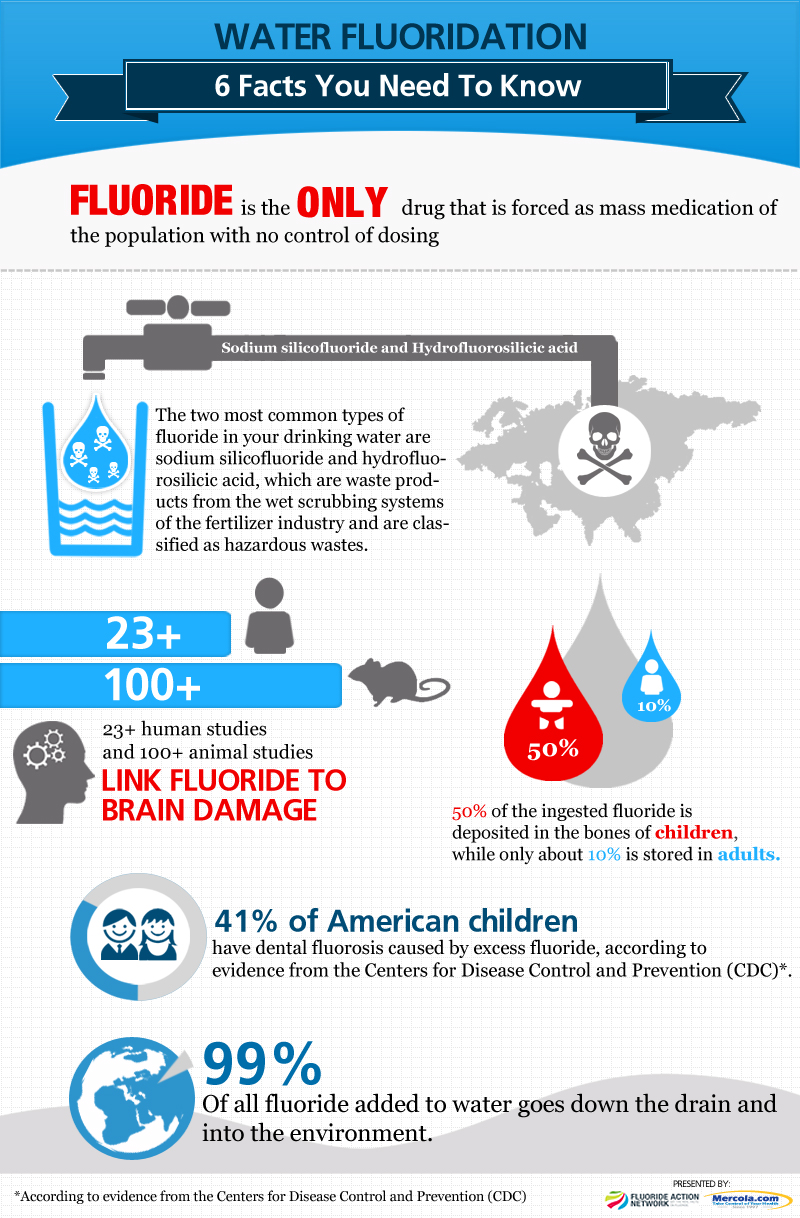
Fluoride....Not So Intelligent!

For those of you who know me or I have had the opportunity to speak in some detail with about health issues you probably know the stance that my wife and I have on fluoride and fluoridation of drinking water.  We have in the past taken a public stand against our communities efforts to implement fluoridation of the drinking water.  This is a subject close to my heart.


Every year more and more studies come out intimating fluoride with health problems and concerns.  Dr. Joseph Mercola does a great job in a recent newsletter article summarizing some of the studies and the issues behind fluoridation.  In his article, he specifically addresses the effect of fluoride on brain function and I.Q. 

Here is the entire article!

Dr. Heller